
Ceiling water damage repair in Allen, TX
When a ceiling stain shows up tells you almost as much as where it is.
Emergency Line(972) 544-433924/7 emergency line. Free estimates from local pros.
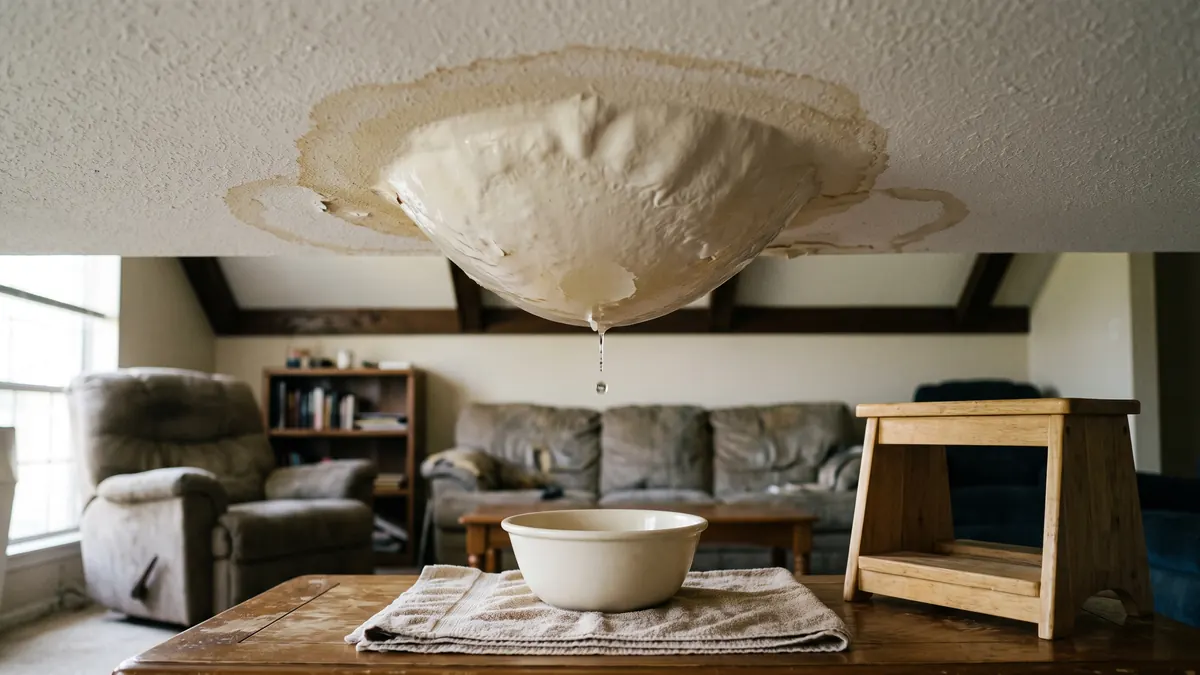
The month a ceiling stain shows up is the first real clue to what caused it. A mark that spreads in July points somewhere different than one that follows a spring hailstorm or shows up after a hard freeze. Before anyone touches a ladder, the calendar has already narrowed the list.
The cooling season points overhead
Allen runs its air conditioners hard from spring through early fall, and every one of those units pulls water out of the air the whole time it’s on. That water is supposed to leave through a drain line and land outside, not in the attic. When the line clogs or the drain pan overflows, the ceiling below the air handler is usually the first place it shows. If the timing lines up with the AC running most of the day, the ac condensate guide charts how a clogged line turns into a ceiling problem and what usually stops it from happening a second time.
Spring storms leave a slower mark
Hail season in Collin County tends to peak in spring, and a storm on March 24, 2019 broke windows and dented roofs across the county with hail reported at golf-ball size and up. A storm like that can crack a shingle or lift flashing without anyone noticing right away. Rain finds that opening on a later storm, not the one that caused it, so a ceiling stain tied to hail damage can show up weeks after the hail itself did. Storm damage cleanup keeps the room-by-room detail on what a breached roof does once rain gets behind it.
A hard freeze reaches the attic lines
A ceiling stain that opens up during or right after a hard freeze usually means an attic supply line took the cold badly. The stain tends to land almost straight below wherever that line runs, which makes this one of the easier sources to place once you know to look up instead of around the room.
Any month, a supply or drain line
A stain with no season attached at all usually comes from plumbing that runs above the ceiling for reasons that have nothing to do with weather: a bathroom drain, a second-floor supply line, or a fitting that finally gives out after years of slow wear. Leaks like that don’t wait for summer heat or a winter freeze, so a stain in October or in the middle of a mild March is more likely a plumbing problem than a seasonal one.
Dry in place, or does it come down
Whether the drywall gets saved or replaced usually comes down to two things: how long it stayed wet, and whether it’s holding its shape. Drywall that dried within a day or two and never sagged can often stay, once it’s confirmed dry behind the surface and not just on top. Drywall that’s soft, sagging, or stayed wet for several days usually has to come out. Wet gypsum gives up its structure from the inside, and no amount of surface drying restores it. The insulation sitting on top of that drywall holds water long after the paint looks dry, so a look above the ceiling is worth doing even when the visible damage looks small. That decision gets a fuller walkthrough on the water damage repair page.
Timing narrows it before anyone climbs a ladder
What’s directly above the stain decides which trade takes the job: a roofer, an HVAC company, or a plumber. Working that out from the floor alone is guesswork. A call talks through the timing and what’s sitting above the mark, and narrows the trade before anyone gets on the roof or into the attic.
Common questions
If the ceiling looks dry, can I just repaint?
Only once the source is actually fixed and the material behind the paint is dry, not just the surface. Paint over a ceiling that's still holding moisture and the stain usually comes back within weeks, sometimes darker than before. A quick check above the drywall is worth the extra day before anyone picks up a brush.
Is it okay to poke a hole in a bulging spot to let the water out?
No. A bulge means the drywall is already saturated and losing its strength, and opening it yourself doesn't stop whatever is still leaking above it. It also risks a bigger section giving way once the weight shifts. Get the source confirmed and stopped first, then let someone assess what the ceiling itself needs.
How do I know whether to call a roofer, a plumber, or an HVAC company first?
The season is the fastest clue. A stain that shows up during hot months usually points to the AC, one that follows a spring storm points to the roof, and one with no clear season attached is often plumbing. From there, a look at what's directly above the mark narrows it the rest of the way.
Related pages
Appliance Leak Cleanup
The plumber fixes the tank. This page is about everything the leak reached on the way down.
Learn more →Burst Pipe Cleanup
Where the water landed, inside a wall, under a floor, or through a ceiling, decides how a burst pipe gets cleaned up.
Learn more →Commercial Water Damage
A business with water on the floor runs on a short chain of decisions, and whoever's on site starts it, not the owner.
Learn more →Emergency water removal
Emergency water removal is the first few hours after water hits your floor, in the order they actually happen.
Learn more →Talk to a local pro now
We answer 24/7. One call gets a Allen crew moving on your water damage, with a free estimate and help with your insurance claim.
Emergency Line(972) 544-4339Free estimates. No obligation to hire.